
Why Can’t I Remember My Childhood?
Trauma therapy in person in Wichita and online across Kansas
Do you feel like you remember fewer things than some of your peers? Maybe it sometimes seems like other people’s childhoods are rich tapestries of interesting experiences but your childhood more closely resembles a white wall without features? Let’s unpack this.
Is It Normal to Not Remember Your Childhood?
Some variance in what you remember is normal! While a few people have very early memories, many people’s first memories are at ages 3, 4, 5, or even 6. If you don’t have early childhood memories, that’s common and not necessarily worrisome. Additionally, there is natural variance in how much different people retain due to more or less interesting events: you might remember the giant u-haul from moving across the country, or you might not have bothered to store a memory from a year with 365 identical days. And finally, people have different brains that prioritize different types of memories: one person may remember baseball statistics easily but forget what people said, while someone else remembers no math at all but recalls every interplay of an interaction. Human variance is normal.
Reduced childhood memories can also be due to aphantasia. Aphantasia is a newer term that describes how some people encode memories without a visual component. If you know facts about your childhood but don’t remember it as pictures and movies in your mind, consider reading about aphantasia to see if that describes your experience of reduced childhood memories.
Knowing what is a significant amount of childhood forgetfulness is tricky due to the normal human variance in memory, but in general I’ve found that when people feel it is notable that they can’t remember their childhood, they’re often on to something. You are the best information about you! So what does it mean, if it feels significant to you that you can’t remember your childhood?

Forgotten toy
How Trauma Impacts Memory
The human brain is a marvelous organ that adapts in numerous ways to conserve energy and keep us moving through life. Sometimes, it stores memories to keep us alive (“Hey, I got a stomachache last time I foraged that kind of berry…”) and at other times, it seems to tuck memories away where they can’t easily be accessed so we can cope with life (“Nope-nope, can’t afford to think about that for even one second if I am going to go to school and learn math tomorrow…”). If a lot of your childhood was unsafe and harmful, your brain may have decided to tuck a lot of memories away in an inaccessible corner so that your capacity to keep going to school and playing with other kids as if nothing was wrong, remained intact. Part of you held the trauma off and away by itself, so that you could keep going on with life.
But that doesn’t mean nothing was stored – your brain may have stored fragments of memories. In particular, you may have memories that are stored feelings and reactions, without a narrative attached to them. Does it ever feel to you like you’re more reactive than other people, more easily triggered, anxious when “nothing is wrong,” and more emotionally fragile? Consider whether you could be having memories that are being experienced as “emotional flashbacks.”
Therapist Pete Walker writes about emotional flashbacks like this:
“Emotional flashbacks are sudden and often prolonged regressions to the overwhelming feeling-states of being an abused/abandoned child. These feeling states can include overwhelming fear, shame, alienation, rage, grief, and depression…. Flashbacks can range in intensity from subtle to horrific.” (1)
So if you:
1) have few narrative memories of your childhood,
2) know your childhood included trauma,
3) and you have sudden, strong emotions that (in retrospect) feel too large for the situation that generated them
…consider whether you maybe do have some memories of childhood, but that they could be fragments of traumatic memories that pop up to haunt you, without you even knowing they’re a flashback memory.
What To Do About It
If your childhood was traumatic but you don’t remember much about it, know that retrieving those memories is not the goal of trauma therapy. I don’t need to know what happened to you in detail, to work with the flashbacks you’re having now. Therapy is not a courtroom where we have to determine the details and facts of what happened; it is a healing space where we mend what’s not working right now.
For example: if you’re having overwhelming surges of shame, then the feeling of shame is where we begin. A somatic approach to trauma is first of all curious about the present moment: Where do you feel the sensation of shame in your body right now? What is your impulse response to that shame?
When memory is fragmented by trauma, we begin with the body, not the brain. As they say: the body keeps the score.
The question shifts from “Why can’t I remember my childhood” to other questions, like:
· What is my body experiencing?
· How did this feeling/behavior help me survive?
· What do I need now, in order to heal this reactivity?
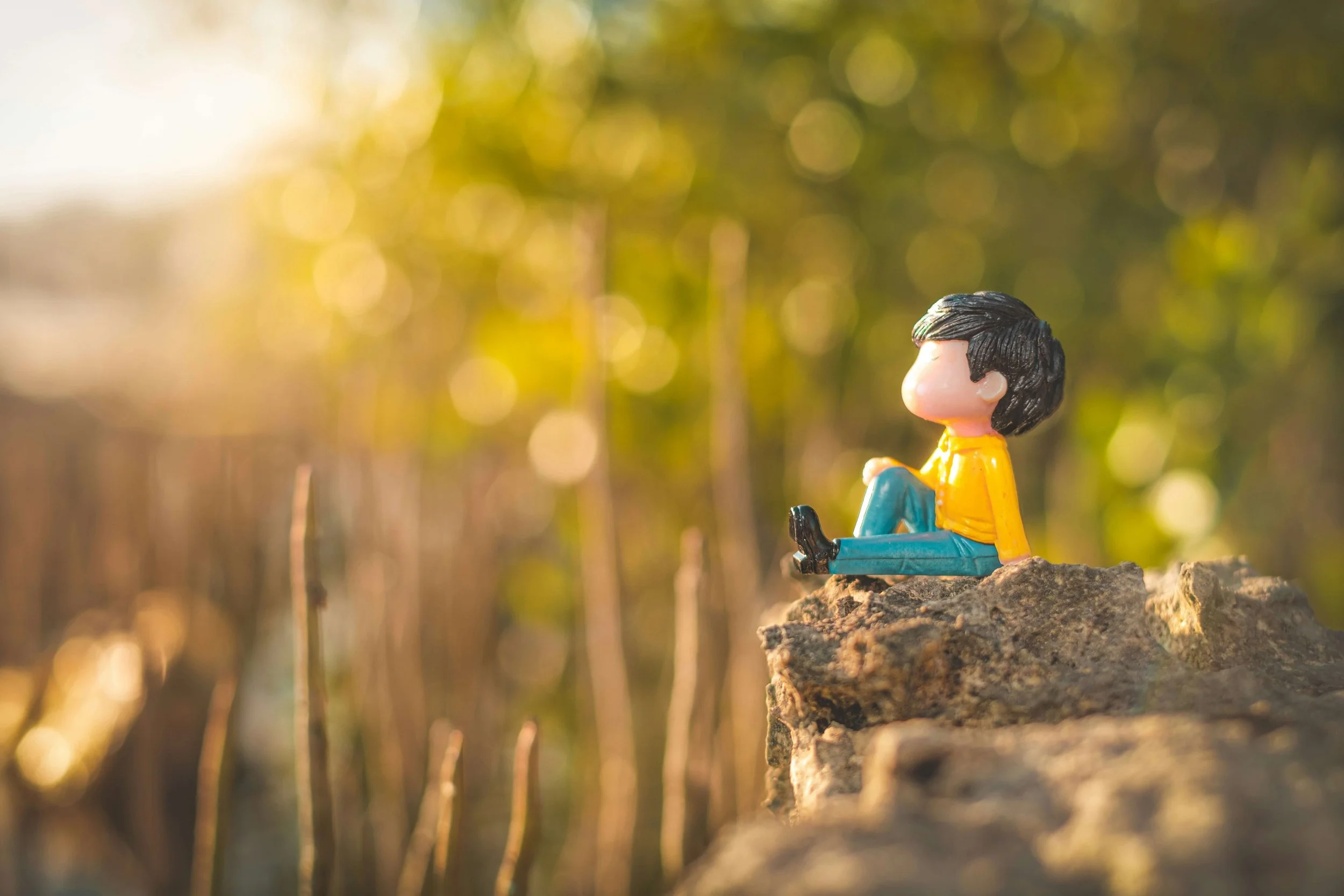
Looking forward
Does Therapy Make Memories Come Back?
Throughout the process of trauma work, you may indeed find some memories clarify or new ones pop up. Because memory can be altered slightly every time we visit it, the goal of trauma therapy is not so much to regain and analyze those memories as it is to heal how they’re affecting you now. So you may have some memories emerge or make new connections between existing memories, or you may not: healing doesn’t hinge on that.
If you found this post resonating with you at a deep level, schedule your free consultation to talk about what EMDR or somatic trauma therapy might look like for you. Surviving your childhood may have laid down some emotional flashback loops, but you don’t have to keep experiencing them like this - there is hope for healing!
Elizabeth Peters, LMSW is a licensed therapist seeing clients in person in Wichita and online across Kansas. She provides EMDR and somatic therapy for adults who are overwhelmed by anxiety, painful relationships, spiritual harm, and trauma.
(1) Complex PTSD: From Surviving to Thriving: A Guide and Map for Recovering from Childhood Trauma book by Pete Walker