
Finding an EMDR Therapist
Trauma therapy in person in Wichita and online across Kansas
I love the way that clients’ brains start to make new connections and their physical symptoms start to ease as we keep the brain busy while processing trauma with EMDR (Eye Movement Desensitization and Reprocessing). But if you’re new to EMDR and are wondering things like how to know if it’s a good fit for you or how to find an EMDR therapist, here are some brief answers to some of those common questions!
How to Choose an EMDR Therapist
First: choose a therapist you like and feel safe with. If you don’t feel safe enough to go deep places with your therapist, EMDR isn’t going to be successful.
Then, you can generate an initial list of options for EMDR therapists near you through google, or you can use Psychology Today to search for therapists in your area. The filters on Psychology Today include the capacity to search by their specialty, by your own mental health issues, and by lots of other features like ethnicity and faith.
Next, look for a therapist who has good training. One possible metric is to look for someone who took a training affiliated with the organization EMDRIA, which ensures a level of quality control and a certain depth in its trainings. EMDRIA basic training includes 40 hours of training and 10 hours of consultation, and there are more advanced levels of training after that. Looking for EMDRIA in a therapist’s training description can help you find someone with a known baseline of training if you don’t have any other way to evaluate (recommendations from their other clients, for instance).
And finally, notice whether they have experience with the kind of trauma you want treatment for. EMDR trainings all provide education on treating single-incident traumas, but if you prefer to work with someone familiar with your background, you can search for someone who specifically treats military trauma, betrayal trauma, birth trauma, medical trauma, first-responder trauma, etc. If your trauma is due to more chronically traumatic situations like a domestic violence relationship or childhood abuse, be sure to look for a therapist who specifically has expertise in Complex PTSD (CPTSD) so that the EMDR will be done at a pace that doesn’t overwhelm you.
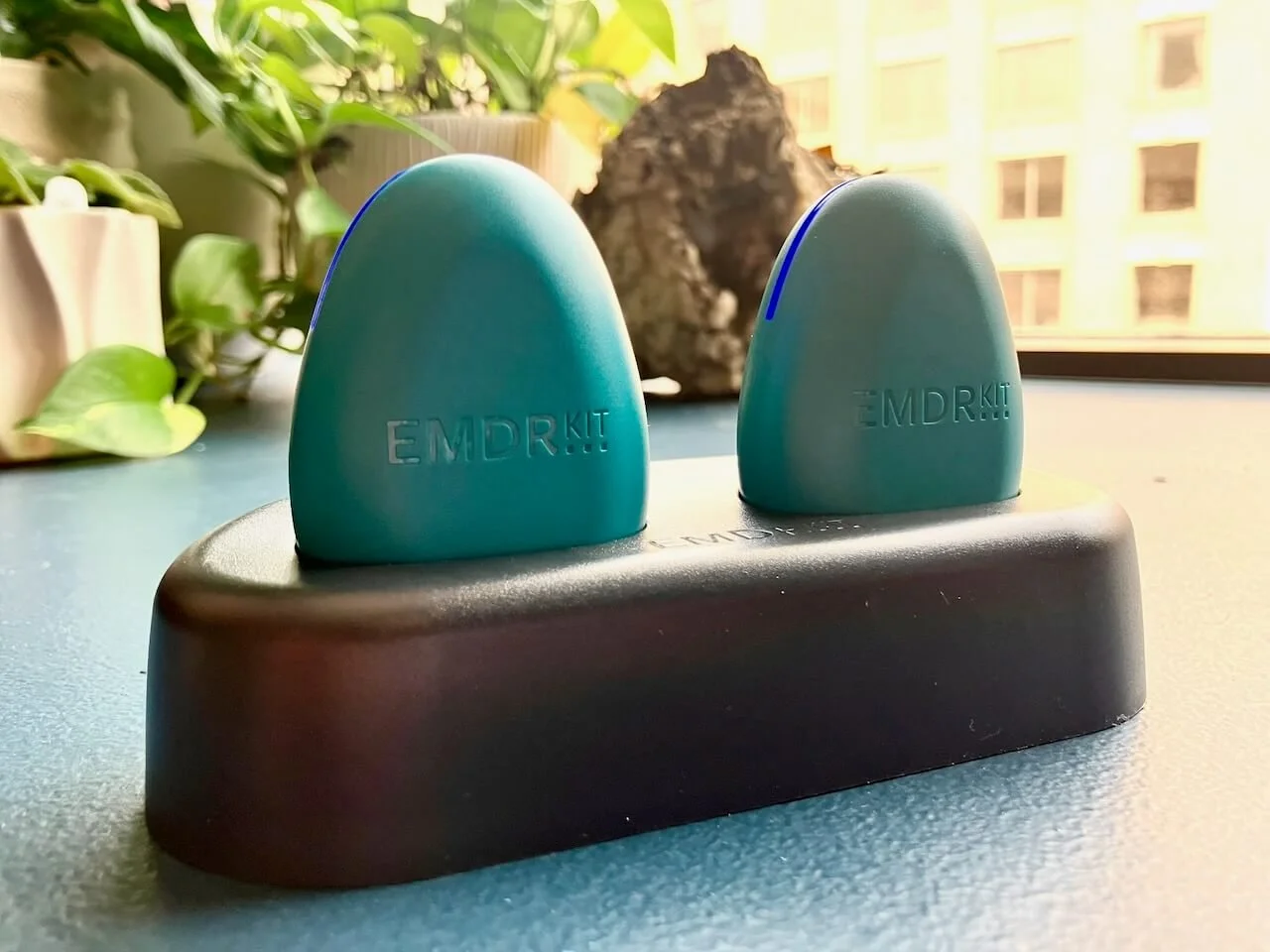
EMDR pulsators - one held in each hand - are a popular choice at my office
Can EMDR be Covered by Insurance?
Yes! If you have a diagnosis of PTSD (Post-Traumatic Stress Disorder), insurance companies do accept EMDR as a valid treatment for PTSD. Appointments are limited by insurance to one hour sessions, once a week. This pace can actually be really helpful for some people, giving them time to metabolize their gains and consolidate healing between appointments.
However, many EMDR therapists also offer the option to private pay for longer sessions - it’s always worth asking whether they offer that and if you are a good candidate for that format, if that’s a financial option for you. Longer appointments give you longer stretches of time in deep work without loosing as much time entering and exiting that work in hourly appointments.
What are Ways of Doing EMDR?
EMDR stands for Eye Movement Desensitization and Reprocessing, but eye movements aren’t the only way to conduct bilateral stimulation. The most popular choice in my office is the hand pulsators (see pictures). And in many cases, I have clients actually use two forms of movement at once: eye movements and tapping their knees, or passing an item between their hands while pulsators buzz in their pockets. There are many ways to keep your brain busy while processing trauma; before any EMDR is done, your therapist should work with you to figure out the format and speeds that work best for you.
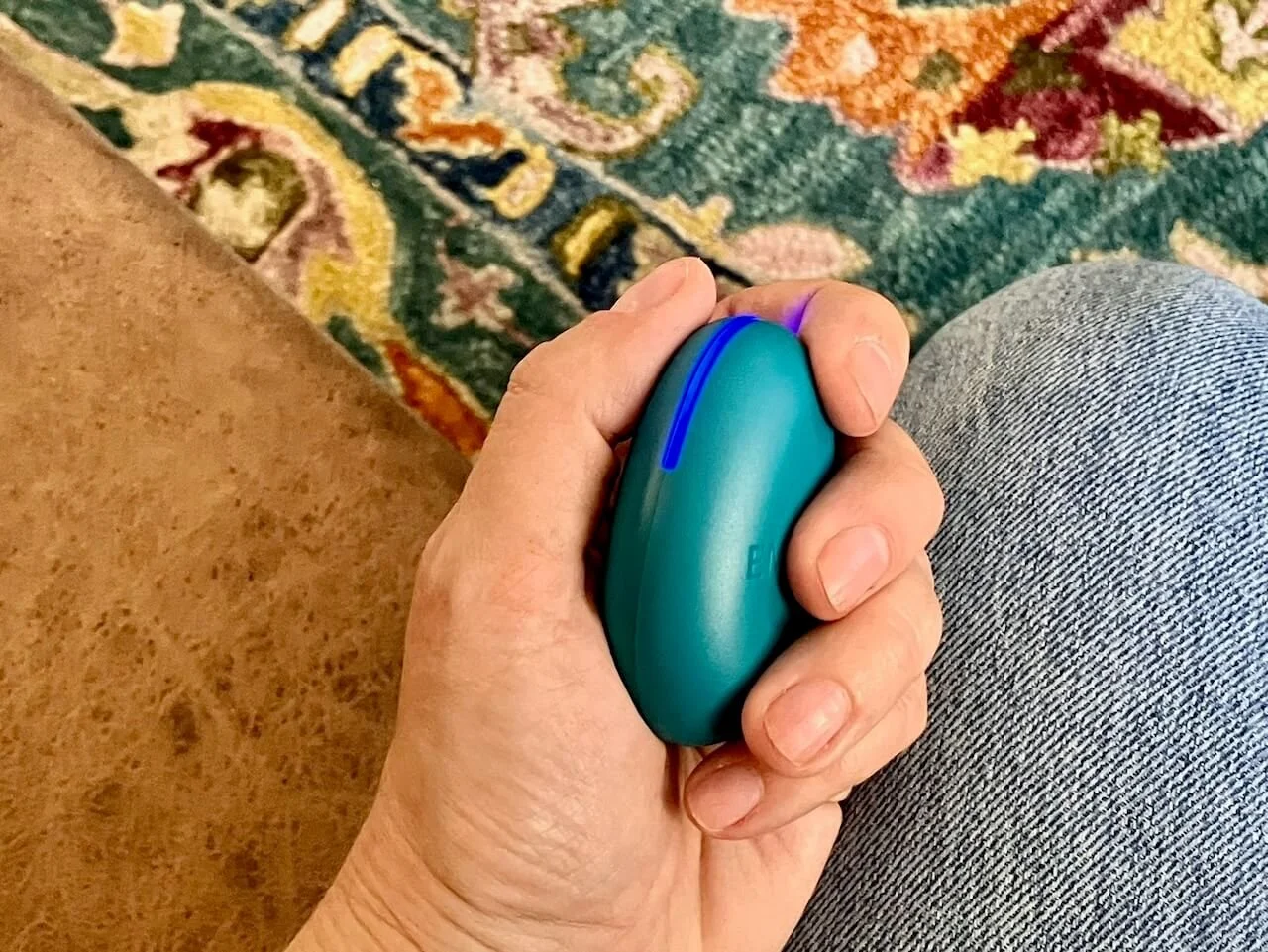
Pulsator in hand during EMDR processing (though they can also be put into pockets!)
Does EMDR Work for CPTSD?
EMDR can absolutely be used for the treatment of Complex PTSD, but it may look a little different - that’s why it’s important that you find a therapist who understands CPTSD. When someone is seeking EMDR for a single incident like a car accident, they may find a resolution of PTSD symptoms and be done with therapy in a handful of appointments. But when trauma has been chronic across a long period of time, unwinding the ways it has impacted nervous system regulation, self-image, and relationships with others can be a much longer process. Good therapy for CPTSD will provide plenty of foundational work before moving into trauma reprocessing through EMDR and/or other treatments, and the trauma reprocessing stage will also take longer due to the larger amount of material to process. You can read a little bit about the stages of trauma work in this article about choosing a therapist for PTSD. But the tl;dr is: yes, when paced correctly EMDR can be part of treatment for CPTSD!
Read more about using EMDR for CPTSD, here.
Who Should Avoid EMDR?
It’s important to have the foundation to trauma treatment - safety and stability - in place well before beginning trauma work. If you’re in a dangerous relationship, overwhelmed by suicidal ideation, facing challenges like significant dissociation, mania, or psychosis, or you’re not stable in housing and finances, EMDR is probably not the right fit yet. Good therapy will not lead you into deeper waters than you’re ready to swim through, and it will help you swim the waters you’re currently in before opening up old material for healing work.
You can read more about what a typical session of EMDR looks like here. If you’re wondering if EMDR could be a good fit for you or have more questions about what it would be like, you can read more about me here and about my approach to trauma here, and then call to set up your free consultation today! You deserve to enter therapy with confidence that you’re in a good place for the work you want to do.
Elizabeth Peters, LMSW is a licensed therapist seeing clients in person in Wichita and online across Kansas. She provides EMDR and somatic therapy for adults who are overwhelmed by anxiety, painful relationships, spiritual harm, and trauma.